Monday, October 27, 2014
The story of Samson is a tragic one
All literature deals with the joy and the terror of what it is to be human. Joy, for example, means happiness, love, success, belonging, a sunny day, and so on; Terror is about the darkness without and within, isolation, fear, rejection, failure... Classically, joy and terror are represented by the two dramatic masks of Comedy and Tragedy.
The plots of both classical forms are characterised by a reversal of fortune: in Comedy, from low to high (the character's fortunes improve); in Tragedy, from high to low (the character's fortunes fall). But these transformations are not simply the result of pure luck. Always, the character's actions contribute to the rising or falling movement. So, for example, in Twelfth Night, Viola, through her ingenuity, charm, and skill goes from destitution to riches, getting married in the process (the play actually ends with three marriages); in the story of Macbeth, the great man of Scotland suffers a calamitous downfall through his own 'vaulting ambition'.
Following these models we can view the biblical story of Samson as a tragedy. Samson is favoured by God even before he is born, with his mother receiving instructions about him directly from an angel. He is endowed with great strength and becomes successful from an early age. All he has to do is to obey God's instruction that he lives as a nazir, that is to never cut his hair, avoid strong drink, and presumably also avoid corpses. In the biblical story he has his hair cut off, eats honey from the corpse of a dead lion, and (presumably) drinks wine during his marriage feast. But these things happen primarily through his own weakness, which happens to be a predilection for foreign women. He just can't resist their looks. It's ironic therefore that once he falls, the first thing the Philistines do is gouge out his eyes.
Wednesday, October 15, 2014
Samson Comics
Since I was a boy I've collected comics: I'm interested in the art of course, but also the form and the fact that they are a great way of telling stories. Recently I had an opportunity to talk about the biblical story of Samson and remembered that I had a couple of comic versions.
One of the versions is from a complete volume of the Old Testament in comic form. It dates from the late 1940s and was given to me by my parents when I was around ten years old. I always loved reading that book and learned the stories thoroughly by reading it.
Both are recommended. Because...
...it's still a strong story (pun intended).
Essentially, it still entices because its twin themes of violence and sex always appeal to human societies. And the subplot of Samson and Delilah is just as famous as that of Romeo and Juliet.
The full scans of both Samson comics are here and here.
Saturday, October 11, 2014
Peppermint 5: I'm disappointed
I was an early adopter of Peppermint OS, and a big fan. This was in the days when Peppermint was not numbered, but known as Ice, and other innovative browsers like Flock were recognising that the mushrooming of social media sites and the emergence of cloud computing were going to take us all into regions that we hadn't even thought of. Ice had a small footprint, the Ice app, cloud-centric design, and was fast -- even on under-powered machines. I loved it. I loved One, Two, and Three as well. But then came Peppermint Four and Peppermint Four was ultimately too finicky and frustrating for me to use. I I always seemed to have problems with panels and the Chromium browser the OS was built on. Well, I was triple-booting as usual, so I just stuck to Mint and whatever else I was running as an alternative. I was sad to lose Peppermint but content. Yet I wanted Peppermint to do well.
Recently Peppermint Five was released, to some acclaim. Most reviewers wrote as if Peppermint Five was a new OS, not a revamped one, and I was encouraged enough to download the ISO and run it. The live CD worked well and so I installed it...
But for me the same problems are there. Compared to Mint and elementary Freya (my current first choices) Peppermint 5 is sluggish, crash-prone, unreliable and user unfriendly. It doesn't help that Mint (Cinnamon) and elementary Freya look better too.
I'm very disappointed, especially since I believe the real mobile revolution is not in hardware but a move away from desktops to browsers (as in Google's Chromebooks) and Peppermint could be a real leader here.
One final word. On Mint and Freya I use Mozilla's Firefox, and with the power of its add-ons, these have become very browser-centric for me and easy to sync with my android phones. Perhaps Peppermint could try using Mozilla again?
Wednesday, September 17, 2014
Vehicles and Students: an analogy
![]() |
| [source: Times of Swaziland] |
At least twice a week, vehicles break down outside my gate; four of five times, vehicles have rolled backwards down the road and crashed through my fence; and everyday, decrepit or even glamorous-looking vehicles find the climb so tough that they either stop on the hill or move so slowly that there's a tailback behind them sometimes as far down as my house.
Whilst thinking about the traffic on this road, I realised that it provides a simplistic but useful analogy to different types of students:
the breakdowns
Vehicles break down because they are poorly-maintained or run out of petrol; in other words, the root cause is usually negligence. Negligent students are those who are seldom prepared for their lessons, who don't have complete notes, who don't follow-up by doing homework and don't learn from past mistakes. Their progress breaks down almost before it starts.
the fallbacks
The vehicles that go backwards down the hill do so because they are overburdened or develop faults or because they are being pushed too hard. These are students who have achieved some measure of success, but, for one reason or another, fail to sustain that success and build on it.
the strugglers
Most vehicles look roadworthy when the road is flat and easy, but when the road gets tough some struggle to make it up the hill. Likewise, some students start well but struggle as soon as the work piles up or the material becomes challenging.
the finishers
These are the vehicles that complete the journey, that can handle the easy and the tough, that are prepared for the road ahead. They are maintained and full of fuel. Students who are up-to-date with their work, willing to learn and creative will usually succeed.
Friday, September 5, 2014
Wednesday, September 3, 2014
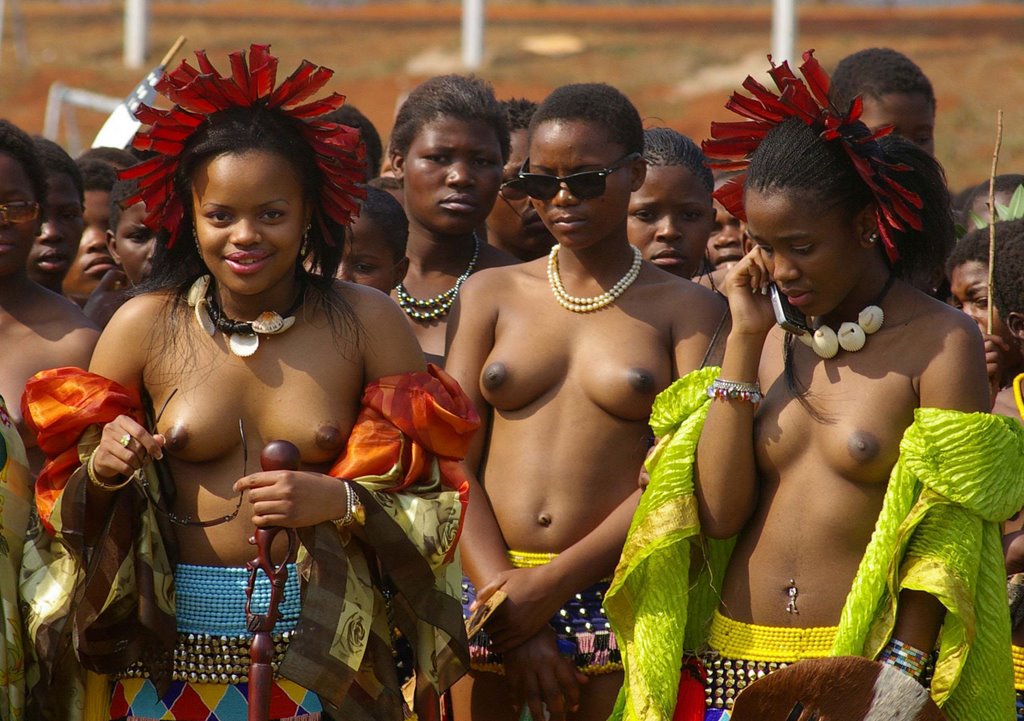
Reed Dancing

I was sitting at home this week watching the kombies and open-backed lorries go past, cram-full of excited singing girls on their way to umhlanga, and thinking, ‘Yes, it’s that time again.’
Tomorrow
the public and plenty of tourists will be watching these girls, along
with thousands of others, dance and dance and dance until the excitement
is in everybody’s heads and streaming from the skins of perspiration
into the air. There will be noise and glamour and all the thrill of a
big day long-awaited. But that will not be the main event. The main
event is today, when the reeds are delivered to the Queen mother’s
kraal.
One
of the earliest cosmological narratives collected from this part of the
world is that of God creating people from reeds. In this story, the
world was already formed but without people and so God went down to the
river’s edge and created humans from the tall reeds that were growing
there. It is Southern Africa’s parallel to the Genesis account of people
being made from clay.
The story is remembered in the clan praise-title, Wena Weluhlanga, ‘You (people) of the reed’, and this is the true significance of Umhlanga,
the Reed Dance. The week’s events are in fact a celebration of our
common beginning and continued existence, a modern echo of an ancient
story. When the tribes began to settle down in this region and build
more or less permanent homesteads and collect cattle, the defining
technology was in the creative use of reeds and grass for building and
thatching. That is still a defining technology in the rural areas
because cattle and their kraals are still central to Swaziland’s
homesteads and culture (think, for example, of the old Tinkhundla
elections, when candidates sat in front of kraals and voters went inside
those kraals to be counted). Reeds therefore are one of our central
focusing images.
The
dancing, then, is not what the event is really all about, although it
is the flashing breasts and plumping buttocks—framed in the vibrancy of
blue and overwhelming red—that attract the eyes and the cameras of
visitors.
Yet
the dancing is not without significance, for dancing is a sign of
vibrant life: if you look at a bed of reeds moving in the wind you can
imagine them dancing, and that’s an apt image for life itself. The reeds
are animated, alive because they have movement. Death, after all, is
supremely a stillness. Life can be seen therefore as a kind of dance:
sometimes a noisy, crazy, careering one, but still a dance.
There
are, I know, many critics of this annual national event, who either
believe the Dance belongs too firmly in the past to make sense in the
present or else squirm uneasily to see so much young flesh shaking and
quivering in public view. But the Dance—precisely because it has links
to the creation myth—is one of the bedrocks of what it means to be Swazi
and southern African. In an era when so many trumpet the call of being
unique and presenting an authentic voice within our global village, it
is only Umhlanga and iNcwala (and really not so much else)
that provide the links and foundations for national and individual
identity. It is when the nation’s origins and persuasions are on
display. Today and tomorrow then, it is not only the girls but also the
whole nation that will be dancing. By watching the swaying, jostling,
singing girls at Umhlanga and imagining them as that amazing
thing, a bed of living reeds, we can deepen our understanding, and
perhaps regain something of the wonder of life itself.
© Kenneth Rowley 2014 (originally published Saturday, September 02, 2006)
Sunday, August 31, 2014
Signs of the Times
![]() |
| (source: Times of Swaziland) |
It would be interesting to know how many Swazi folktales and other fundamentals of oral literature these modern girls know; for sure they know all about Rihanna, Lil' Wayne, and Niki Minaj (whose recent video has already been downloaded 100 times more than Swaziland's total population). As we move more and more towards a global village, so the unique details of a culture tend to disappear, swallowed up by the greater whole. Or, as some have put it, we all know more and more about less and less.
Friday, July 25, 2014
Mac-like
Mac-like
Everybody knows that Apple is the Rolls-Royce of computing. When I encountered my first Mac, back in early 1985, every computer I had ever used before became a second-class citizen. And even when Apple's fortunes hit rock bottom in the dark nineties (do you remember a pic of a Windows install disc with the legend, "One OS to rule them all, and in the darkness bind them"?) the Mac refused to die. Why? I've always believed it was a combination of three things: a Mac always worked straight out of the box;
a Mac always expressed the Human Interface Guidelines (HIG) that stood behind it;
and, if you had the courage and a little bit of skill, a Mac could always be tweaked.
My favourite Mac OS was OS 7; my favourite Mac program was the experimental but amazing Cyberdog (an Internet suite built to demonstrate the concept and power of OpenDoc). Cyberdog was a joint project of Apple and IBM and it was killed off c.1997 by Microsoft pressure; Windows 8 reminds me of it everytime I see a new WinBox. Anyway, now it's 2014 and I still have my Macs. But I now also have linux. My first linux love was Bianca (2.2) and I still use Mint (Quiana 17 is on a partition of this machine). But now linux also has its own OS 7. It's name is elementary OS.
Wednesday, July 31, 2013
I was so happy
seeing you again
seeing you again
that the image
now haunts my brain
like a watermark
or the acidic stain
left by an accidental spill
of the choicest wine.
In time
the image
may fade
but I wouldn't count on it;
your life
your life
is in that image
and everything that you were
or ever will be
to me
is there
for me to see
on the other side of my eyelids
whenever I close my eyes.
c Kenneth Rowley 2013
Saturday, July 27, 2013
How to disable Windows 8 'Secure Boot' etc and install Ubuntu, Mint or Peppermint
You've bought a laptop that came with Windows 8 pre-installed on it and now you're tearing your hair out? There's hope (though maybe not so much with the hair replacement). Although Windows 8 ships with a 'Secure Boot' setup that suggests you can't install anything else on the machine (not even go back to Windows 7 or good ol' XP heehe) it's actually quite easy to disable this and install whatever you like. All you need to do is turn the computer off and restart it with the F2 key held down. This will active the BIOS, where you can switch off the 'Secure Boot' and switch to Legacy OS, which means you can use your installers CDs just like you used to, or gparted or whatever. It took me just a few minutes...
I'm posting this from a Lenovo G580 running Linux Mint 14 (Maya). No problems.
Friday, July 26, 2013
for the record
Just for the record, currently I use a MacBook, an iPad, an Android phone (Samsung S2), and a cheap box that came pre-installed with Windows Vista but now has Linux Mint 14, Peppermint 4, and Ubuntu 14 installed on it (no Windows).
Subscribe to:
Posts (Atom)
-
I was sitting at home this week watching the kombies and open-backed lorries go past, cram-full of excited singing girls on their way to...
-
Harold Budd Back in the 70s I had a friend called Howard, who lived in Wimbledon village, and we met regularly to listen to and discuss ou...
HAROLD BUDD: go in peace
Harold Budd Back in the 70s I had a friend called Howard, who lived in Wimbledon village, and we met regularly to listen to and discuss ou...